Nov. 24 2024
In today’s edition of the ICP Roundup, we will focus on DeFi on the Internet Computer (ICP) and its Total Value Locked (TVL). Specifically, we will analyze the distinction between staked TVL and TVL within DeFi applications, highlighting their respective roles and implications for the ecosystem.
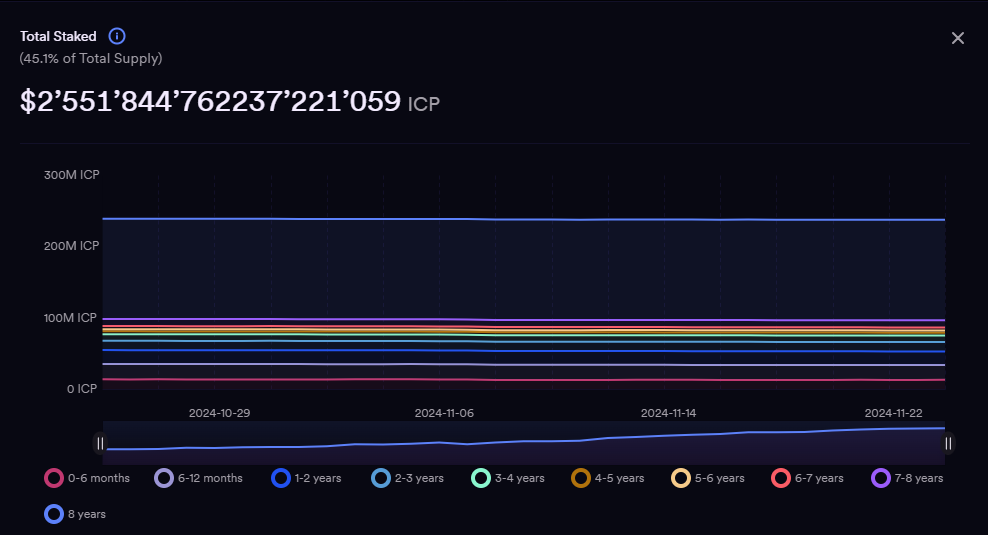
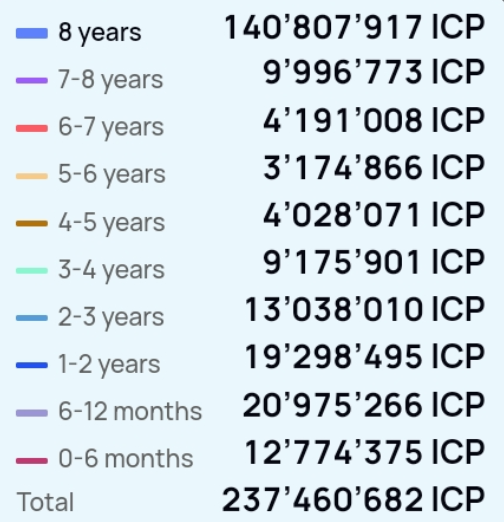
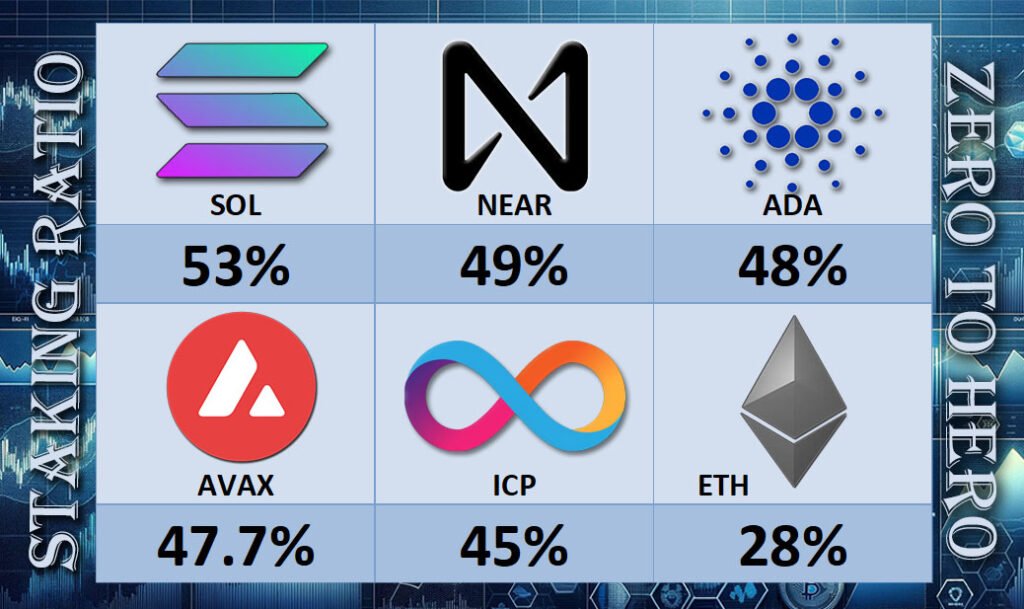
Here is a comparison of staking ratios for major Layer 1 blockchains:
Source: https://x.com/pnxgrp
Key Observations:
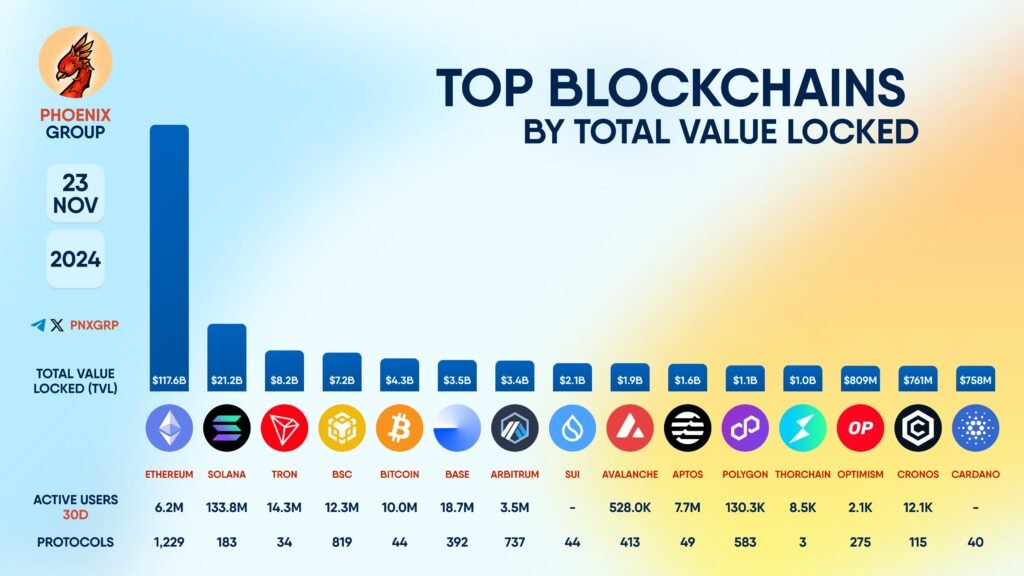
Ethereum’s Dominance: Ethereum leads with a substantial DeFi TVL of $117.6 billion, capturing a significant percentage of the market share, underscoring its central role in the DeFi landscape.
Emerging Competitors: Solana, TRON, and BNB Smart Chain follow, each holding significant portions of the DeFi market.
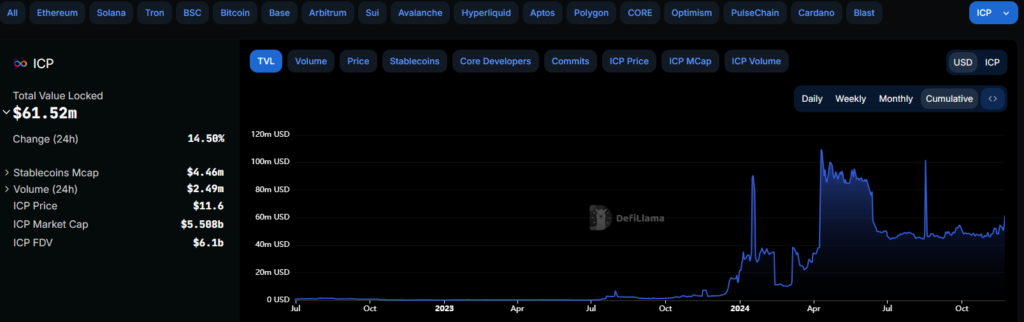
Source: defillama
Over the past year, ICP has experienced a significant surge in its decentralized finance (DeFi) Total Value Locked (TVL). On November 24, 2023, ICP’s DeFi TVL was approximately $2.95 million. As of November 24, 2024, this figure has increased twentyfold, reaching around $61 million.
This remarkable growth can be attributed to several strategic initiatives:
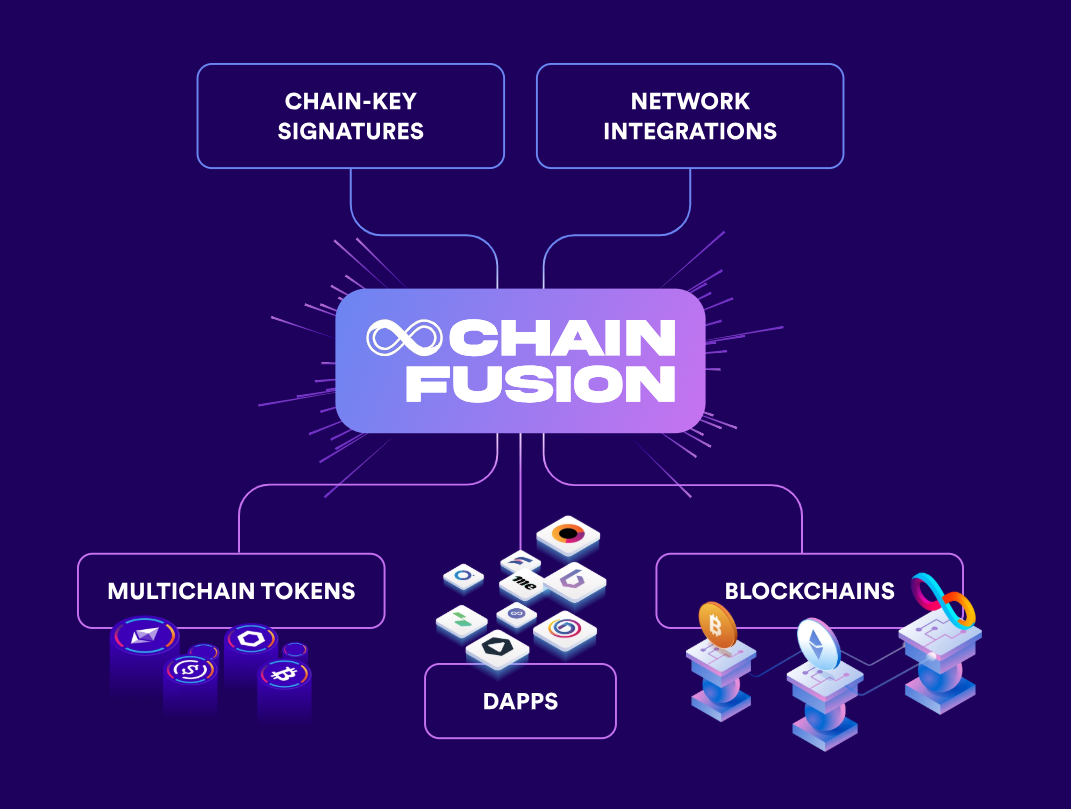
Chain Fusion Summer Initiative: Launched in the summer of 2024, this program aimed to enhance ICP’s DeFi ecosystem by integrating cross-chain capabilities and fostering interoperability.
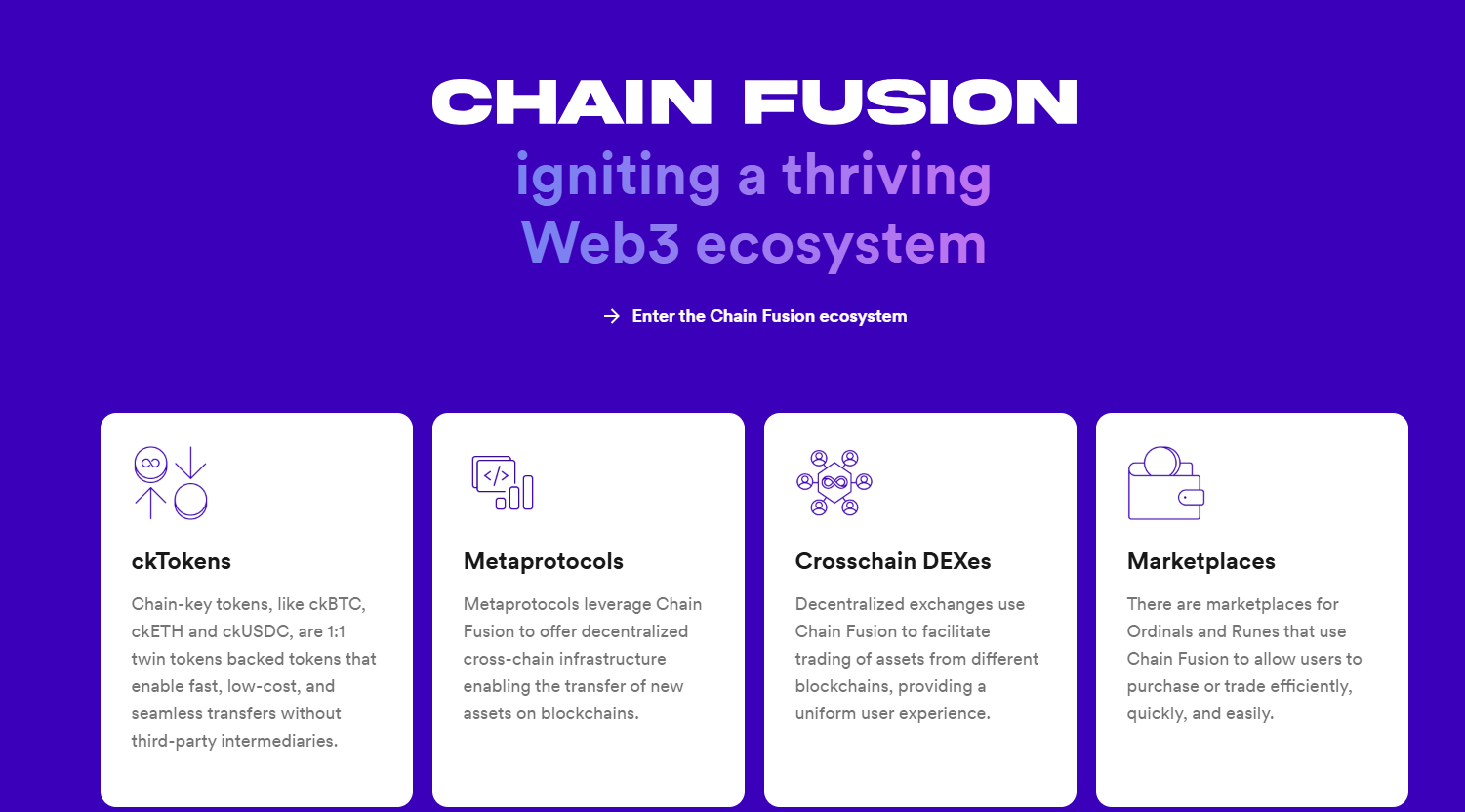
Introduction of CK pairs: DFINITY introduced various Chain Key (ck) assets to the blockchain, including ckBTC, ckETH, ckPEPE, and ckLINK. These wrapped tokens enable seamless interaction with other blockchain assets, broadening the scope and utility of ICP’s DeFi platforms.
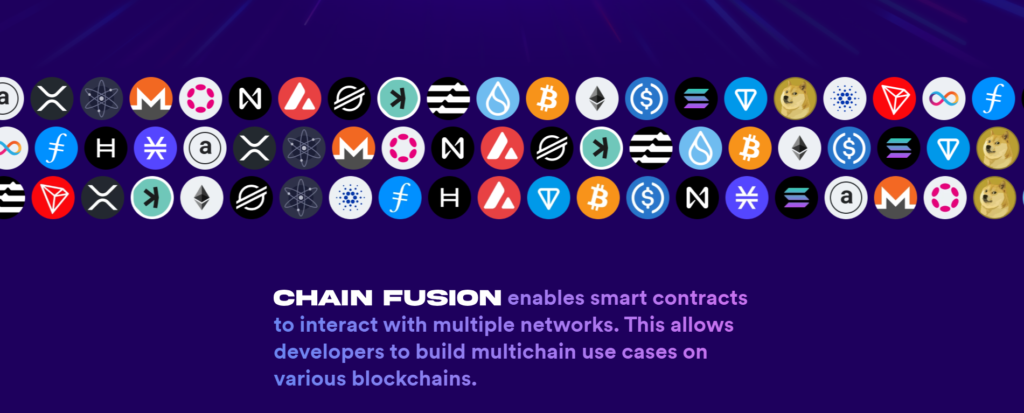
In 2024, the ICP saw significant advancements in its Chain Fusion ecosystem. The year began with just one Chain-Key (ck) token, ckBTC, and has since expanded to support 23 ck tokens, including widely adopted tokens like ckBTC, ckETH, ckUSDC, and ckUSDT. These tokens are driving increased activity and adoption across the ICP network.
What’s Next in 2025?
- Integration with Solana:
The upcoming Solana integration will mark the inclusion of the third largest blockchain, alongside Bitcoin and Ethereum, in ICP’s Chain Fusion toolkit. This milestone will:- Feature support for EdDSA signatures, complementing the existing ECDSA and Schnorr signatures.
- Enable broader interoperability, paving the way for integration with nearly any blockchain.
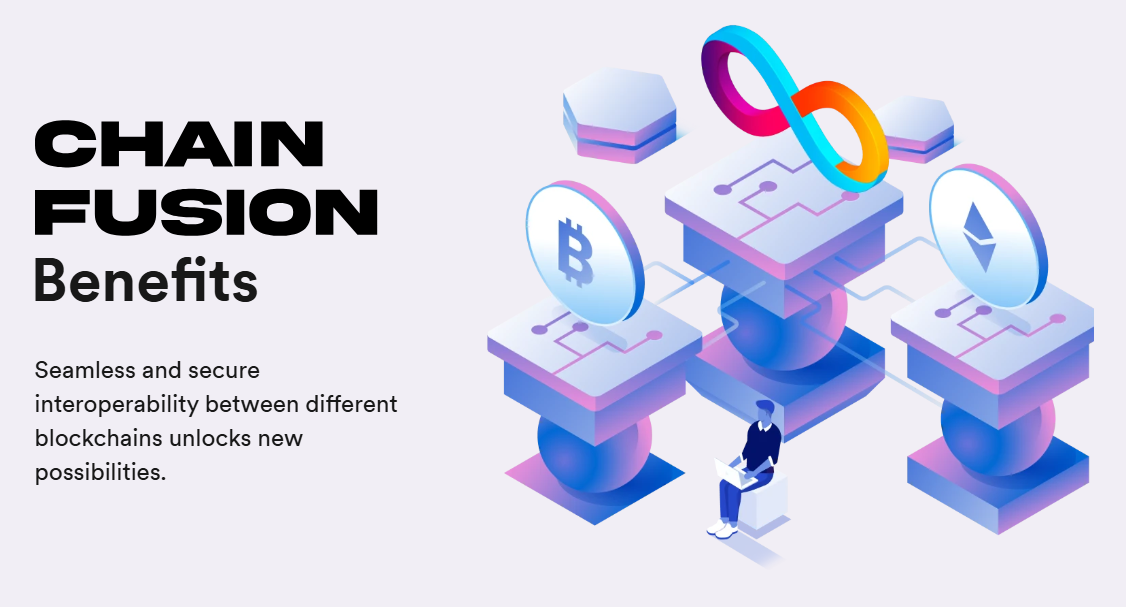
These developments have collectively contributed to the substantial increase in ICP’s DeFi TVL, reflecting the platform’s growing adoption and the expanding capabilities of its DeFi ecosystem.
Moreover, comparing ICP’s DeFi TVL with projects like Ethereum (ETH) or Solana (SOL) is not entirely appropriate, as these projects have significantly higher market capitalizations. A more equitable comparison would be with NEAR Protocol, which has a market capitalization more closely aligned with ICP.
For context, NEAR Protocol’s current DeFi TVL stands at $292M, showcasing a more direct point of reference for assessing ICP’s growth and potential within the DeFi space.
Key Features of DeFi on ICP:
Fully On-Chain Operations:
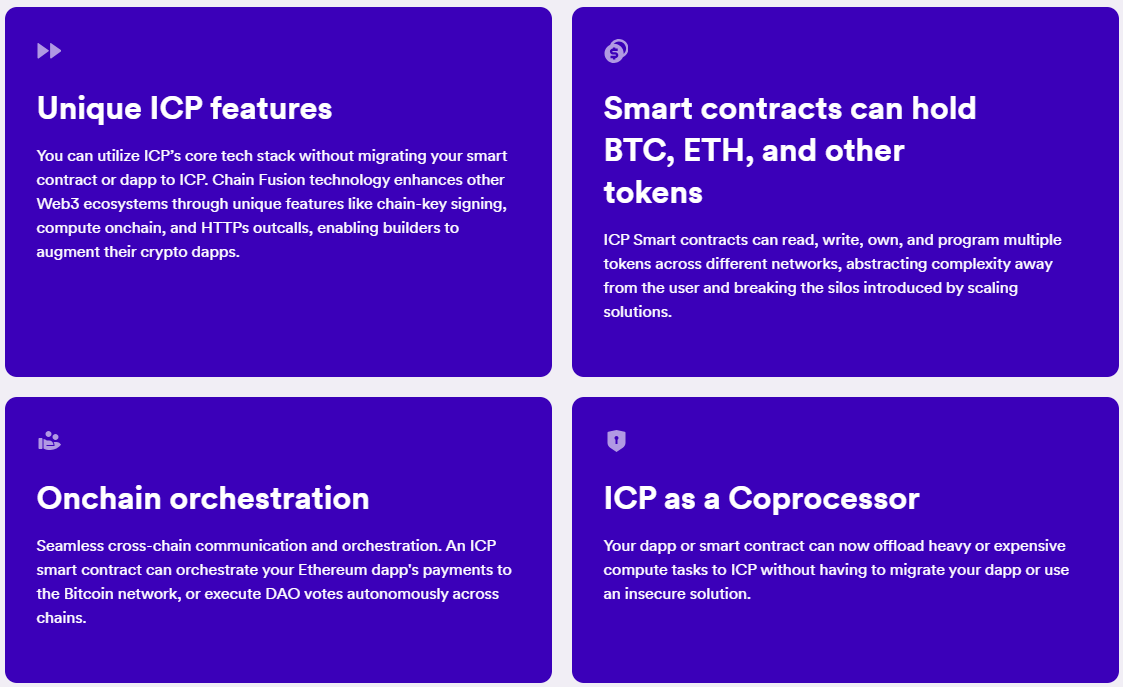
ICP’s canister smart contracts can host both application logic and data, allowing DeFi platforms to operate entirely on-chain. This eliminates dependencies on centralized servers, enhancing security and reducing vulnerabilities often associated with traditional centralized infrastructures.
Multi-Chain Swaps:
Through Chain-Key Signatures, ICP facilitates seamless, bridgeless multi-chain swaps. Users can exchange assets like Bitcoin (BTC) and Ethereum (ETH) directly on ICP-based decentralized exchanges (DEXs) with minimal fees and swift transaction processing times, providing a frictionless and efficient trading experience.
Now, let me outline why the DeFi Total Value Locked (TVL) on the Internet Computer (ICP) has the potential to see significant growth next year:
Expansion of Chain-Key Asset Integration
ICP’s ability to host wrapped assets like ckBTC, ckETH, ckPEPE, and ckLINK enables seamless interoperability with other blockchains. As more Chain-Key assets are introduced, the utility and liquidity within ICP’s DeFi ecosystem are likely to expand, driving a higher TVL.Growing Developer and User Adoption
With initiatives like “Chain Fusion Summer” and the continuous rollout of innovative tools, ICP is actively attracting developers and projects to its ecosystem. As these projects launch and scale, they will contribute to higher levels of locked assets.Competitive Staking and Yield Opportunities
ICP offers attractive staking and yield farming opportunities, which could draw liquidity providers and investors seeking higher returns. Enhanced incentives could play a pivotal role in boosting TVL.Launch of New DeFi Applications
Upcoming DeFi platforms and upgrades to existing ones (like Sonic, ICDex, and ICP.Swap) will likely create additional use cases for assets on ICP, leading to increased deposits and locked value.Community and Ecosystem Growth
ICP’s growing community, combined with its innovative governance model and long-term commitment by stakers (the “8-Year Gang”), demonstrates robust confidence. This social foundation can accelerate ecosystem adoption and attract institutional and retail investors.Market Trends and Blockchain Growth
As blockchain adoption grows globally, ICP’s unique fully on-chain architecture positions it to capitalize on the broader trend toward decentralization. A rising tide in the DeFi market could naturally elevate ICP’s TVL.
These factors, combined with ICP’s commitment to innovation and community-driven growth, position it as a blockchain with strong potential for significant DeFi TVL expansion in the coming year.
The partnership between Osmosis and Omnity Network marks a significant advancement in blockchain interoperability. Sunny Aggarwal, Co-founder of Osmosis, highlighted the current composition of alloyed Bitcoin on Osmosis, noting that approximately 97.5% is Wrapped Bitcoin (WBTC), amounting to about $20 million. He emphasized the urgent need for a decentralized Bitcoin bridge, stating, “We have been desperately looking for months at this point on how do we find a really good decentralized BTC bridge to use. And we basically found it with ckBTC.”
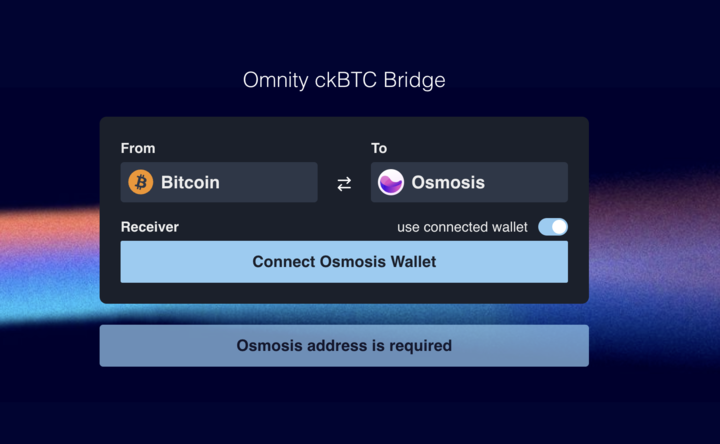
This collaboration introduces Chain-Key Bitcoin (ckBTC) into the ecosystem, offering a non-custodial, decentralized alternative to WBTC. The integration of ckBTC is expected to enhance security and decentralization within the Osmosis platform, aligning with the broader industry trend towards trustless asset bridges.
The introduction of ckBTC is anticipated to significantly boost interoperability within the Internet Computer (ICP) ecosystem. By facilitating seamless cross-chain transactions, this development positions ICP as a pivotal player in the decentralized finance (DeFi) landscape, potentially leading to increased adoption and Total Value Locked (TVL) in its DeFi applications.
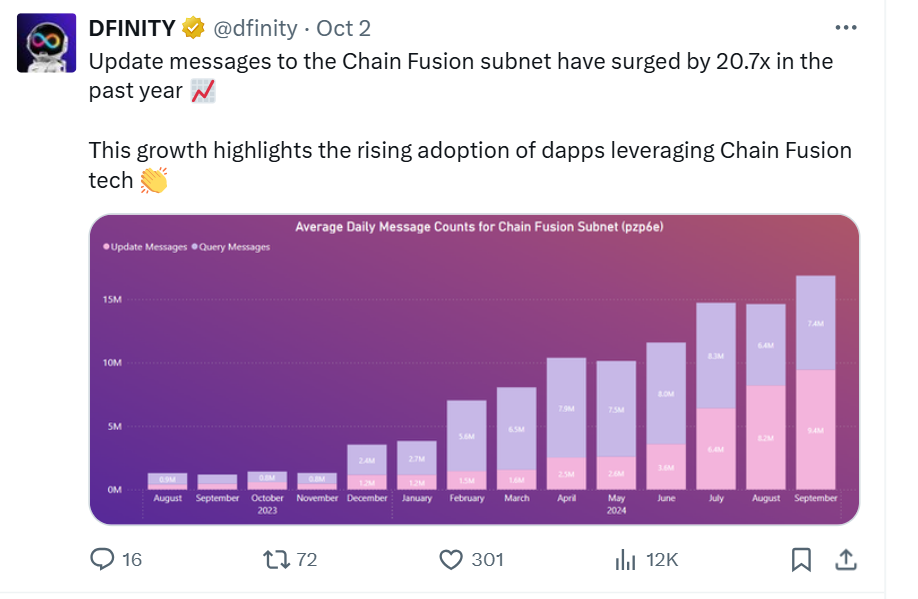
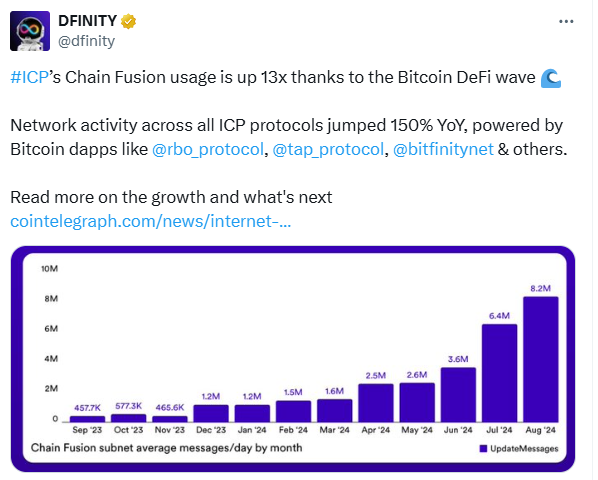
Over the past year, the subnet hosting Chain Fusion technologies has experienced a remarkable 12.3-fold increase in activity, reflecting the growing adoption of multi-chain applications. Additionally, message counts for this subnet have surged by 20.4 times, indicating expanding engagement from new user communities.
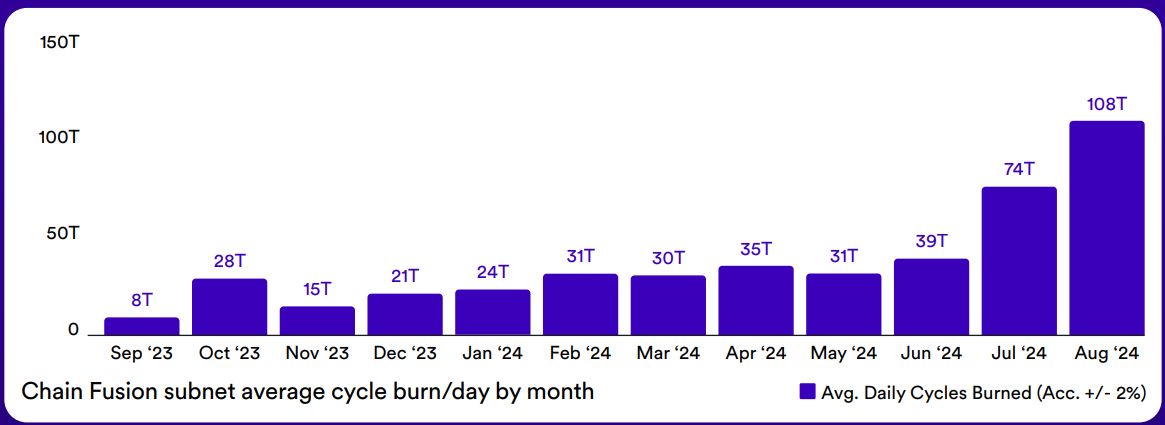
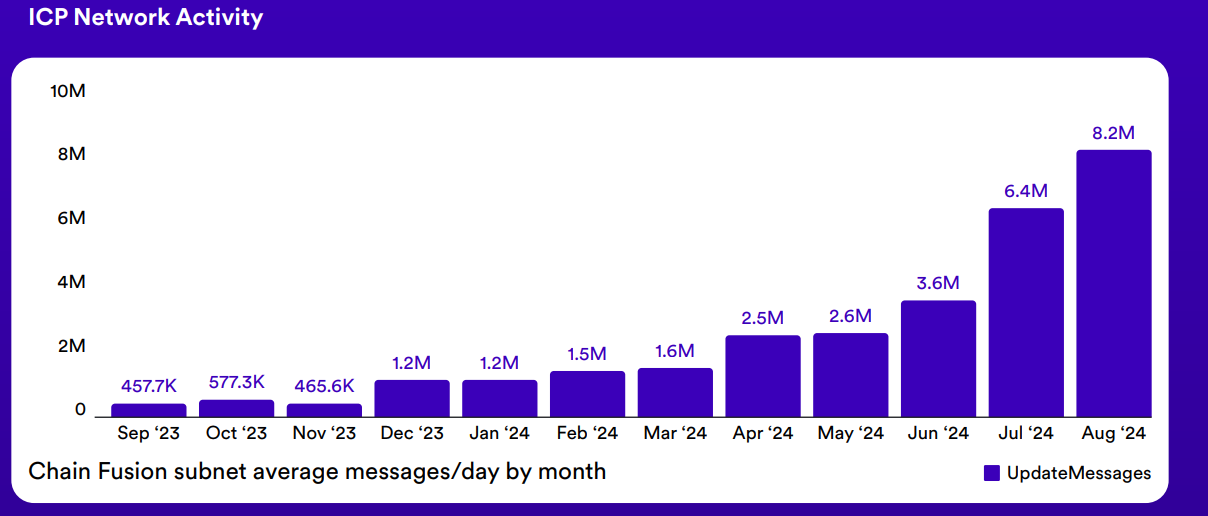
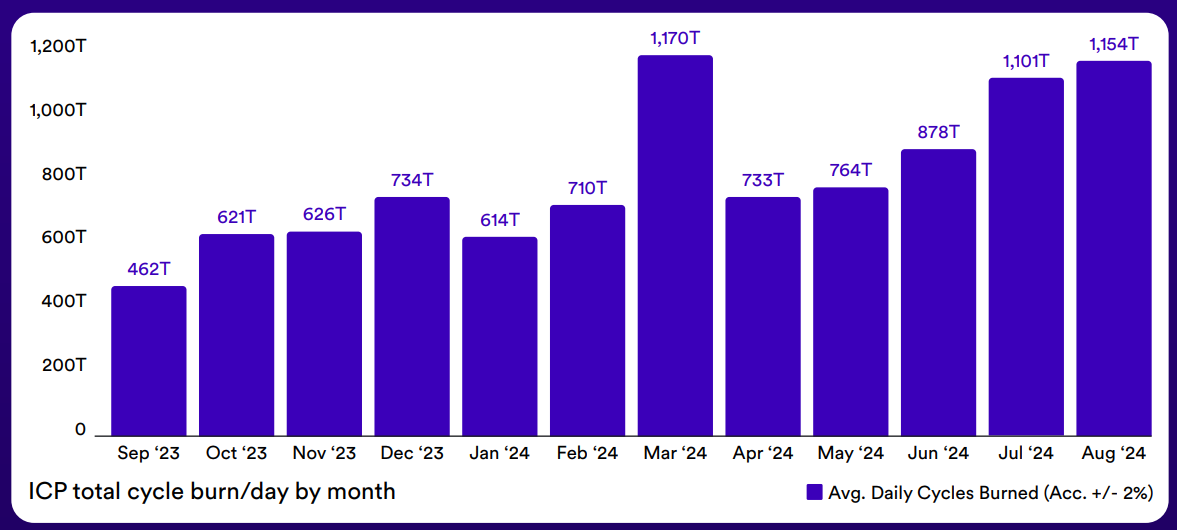
Chain Fusion’s journey began with Bitcoin integration at the end of 2022, followed by Ethereum integration in May 2024. Currently, Chain Fusion supports approximately two dozen blockchains, underscoring its commitment to broad interoperability. The next significant milestone is the integration with Solana, which is anticipated to further enhance the Internet Computer’s multi-chain capabilities.
Why ckBTC is a Game-Changer:
Fast & Affordable Transactions:
ckBTC enables near-instant Bitcoin transactions at a fraction of the cost compared to the Bitcoin main chain.Enhanced Security:
Unlike traditional wrapped tokens, ckBTC is more secure due to its decentralized and trustless architecture.Decentralized Peg:
ckBTC provides a fully decentralized mechanism for pegging Bitcoin in and out, ensuring transparency and eliminating reliance on centralized custodians.
By bridging Bitcoin into DeFi with security, speed, and cost-efficiency, ckBTC enhances Bitcoin’s utility and opens up new avenues for innovation and financial applications.
Leave a Reply